25 Budget Small Backyard Ideas for Tiny Outdoor Spaces
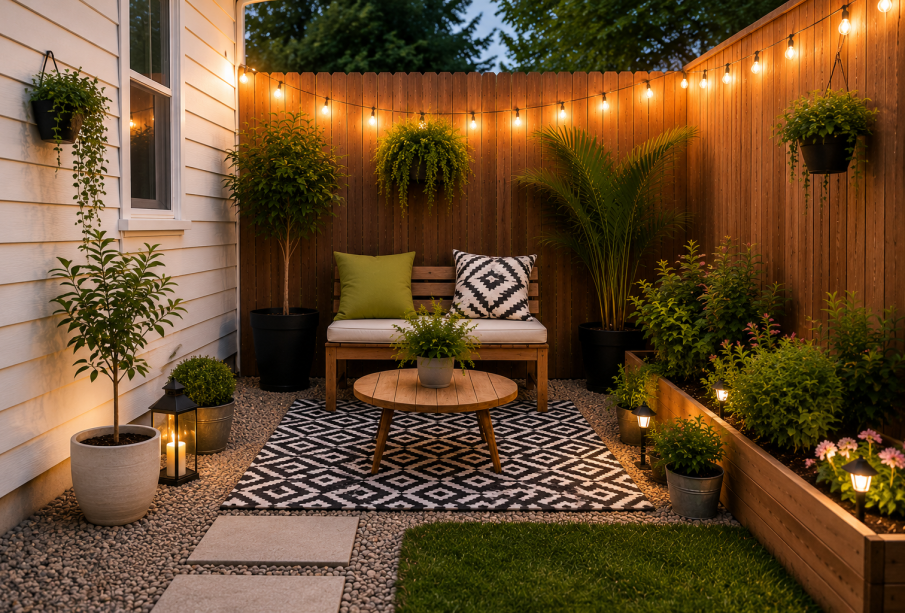
A small backyard doesn’t have to feel like a limitation. With the right layout, smart material choices, and a clear focal point, a tiny outdoor space can rival a professionally designed yard for a few hundred dollars rather than thousands.
This guide covers what actually works for budget small backyard ideas, why it matters right now, and where homeowners most often go wrong when stretching a small space and a small budget together.
Table of Contents
- What Are Budget Small Backyard Ideas?
- Why Small Backyard Upgrades Matter
- Benefits of a Budget-Friendly Small Backyard
- Challenges With Tiny Outdoor Spaces
- Common Mistakes to Avoid
- Expert-Recommended Ideas
- DIY vs. Professional Cost Comparison
- Future Trends
- FAQs
- Conclusion
What Are Budget Small Backyard Ideas?
Budget small backyard ideas are design choices that maximize a compact space’s visual impact without a large renovation budget. Instead of expensive structural additions, they rely on paint, lighting, furniture, plants, and one standout feature to make a small yard feel intentional rather than empty or cluttered.
A 200-square-foot backyard with a clear layout and one striking focal feature will almost always outperform a larger yard filled with mismatched furniture and leftover landscaping.
Why Small Backyard Upgrades Matter
Outdoor living has become a bigger part of how Americans use their homes, especially since remote work normalized spending more daytime hours at home. A small backyard that functions as a usable extra room adds real day-to-day value, not just curb appeal.
There’s a cost angle too. Full backyard renovations can run into the tens of thousands of dollars, but small yards don’t need that budget to look finished. A small tree typically costs $125 to $300 to plant professionally, and portable shade options like patio umbrellas run $50 to $500 depending on size and quality.
Benefits of a Budget-Friendly Small Backyard
- Lower financial risk — smaller upgrades let you test an idea before committing to an expensive redo
- Faster completion — most projects finish in a weekend or two
- Better zoning — even a tiny yard can have distinct dining, lounging, and green spaces
- Stronger resale appeal — a well-designed small yard photographs well and signals upkeep
- Lower maintenance — gravel, native plants, and turf typically need less water than a full lawn
Challenges With Tiny Outdoor Spaces
Small backyards come with design problems larger yards don’t face. Limited sightlines mean clutter reads as chaos fast, since every object competes for attention. Awkward proportions and narrow side yards make standard furniture sizing less useful. Privacy is a bigger concern on small urban and suburban lots close to neighboring properties. And shade extremes, either too much or reflected heat off fences, limit plant and material choices more than in open yards.
Common Mistakes to Avoid
Buying oversized furniture. — This is the fastest way to make a small yard feel cramped. Measure first, then shop.
Skipping a focal point. — A yard with no centerpiece, whether a fire pit or water feature, tends to feel unfinished regardless of smaller details.
Ignoring vertical space. — Walls, fences, and pergola ceilings offer design space many homeowners overlook.
Overplanting. — A crowded bed makes a small yard feel smaller. Layered greenery in moderation reads as intentional; too much reads as neglected.
Skipping a budget breakdown. — Without splitting funds across furniture, plants, hardscaping, and lighting, it’s easy to overspend in one category and run out before finishing the rest.
Expert-Recommended Ideas
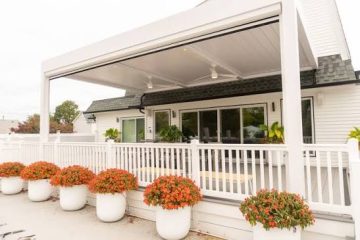
1. Choose one standout focal point — a fire pit, small pergola, or water feature makes the whole yard feel professionally designed.
2. Add string lighting — often under $100, and one of the highest-impact upgrades after dark.
3. Use outdoor mirrors — reflective decor visually expands a small yard and bounces light into shaded corners.
4. Replace grass with mulch, gravel, or native plants — cuts water use and mowing time while adding texture.
5. Choose multifunctional furniture — storage benches and foldable tables let a tiny yard serve multiple purposes.
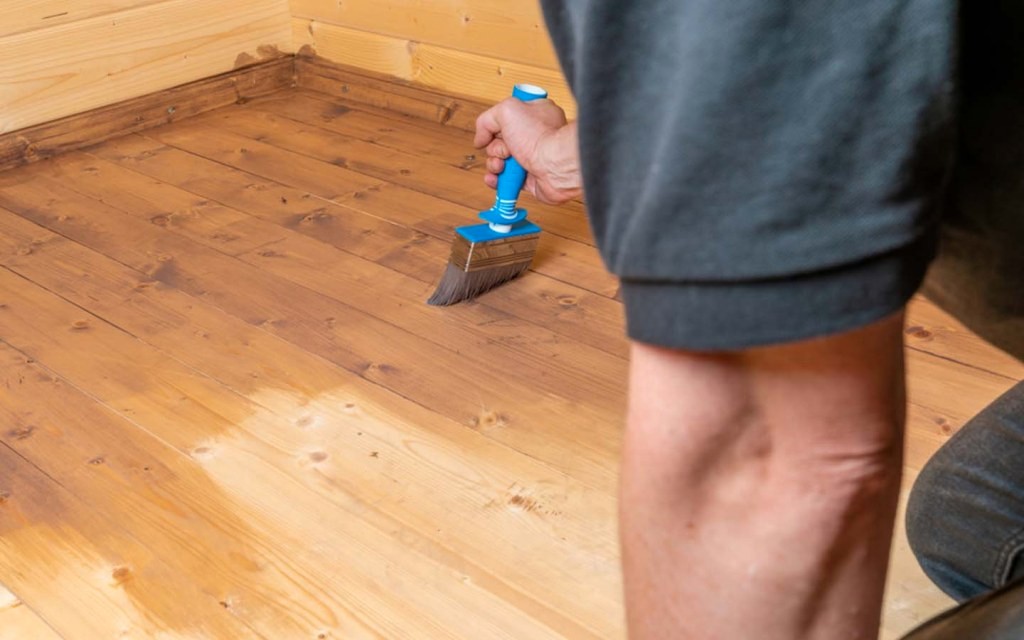
6. Paint or stain the fence — typically $300 to $2,800, and it changes how finished the whole yard looks.
7. Add container gardens — pots and raised planters add greenery without permanent landscaping commitments.
8. Install a small DIY water feature — compact fountains add ambiance without the cost of an in-ground pond.
9. Layer in an outdoor rug — instantly grounds a seating area on concrete or decking.
10. Use vertical or wall-mounted planters — adds greenery without consuming floor space.
DIY vs. Professional Cost Comparison
| Project | DIY Cost | Professional Cost | Best For |
| String lighting | $30 – $100 | $150 – $400 | Nearly everyone |
| Fence paint or stain | $100 – $400 | $300 – $2,800 | Large or hard-to-reach fences |
| Small tree planting | $30 – $80 | $125 – $300 | Homeowners without heavy tools |
| DIY water feature | $100 – $300 | $500 – $2,000+ | Compact, simple designs |
| Deck construction | $2,000 – $4,000 | $4,000 – $10,000+ | Larger structural additions |
Future Trends
Minimalist design continues leading small backyard trends, with clean lines, neutral palettes, and multifunctional furniture replacing clutter. Homeowners are shifting from large lawns toward layered greenery paired with drought-tolerant plants and stone pavers, cutting both maintenance and water use.
Sustainability is also shaping material choices, with more budget makeovers using eco-conscious materials over fully custom installations. Expect continued growth in DIY water features, solar lighting, and secondhand furniture as homeowners chase a designer look without the designer price.
FAQs
What is the cheapest way to update a small backyard?
Painting or staining an existing fence, adding string lighting, and introducing a few potted plants are the cheapest, highest-impact updates, often costing well under a few hundred dollars combined.
How much does it cost to landscape a small backyard on a budget?
Most budget projects range from a few hundred dollars for cosmetic updates to around $2,000 to $4,000 for larger DIY additions like a basic deck.
What makes a small backyard look bigger?
Outdoor mirrors, a neutral color palette, vertical planters, and clearly defined zones all help a small backyard feel more spacious than it is.
Should I hire a designer for a small backyard project?
Many upgrades are DIY-friendly, but a designer can help with larger structural additions or when you’re struggling to settle on a cohesive layout.
What’s the biggest mistake people make with small backyards?
Buying oversized furniture and skipping a clear focal point are the two most common mistakes, both of which make a small yard feel cluttered rather than cozy.