Your Driveway Gate Might Be Making Everyday Life Harder Than It Needs To
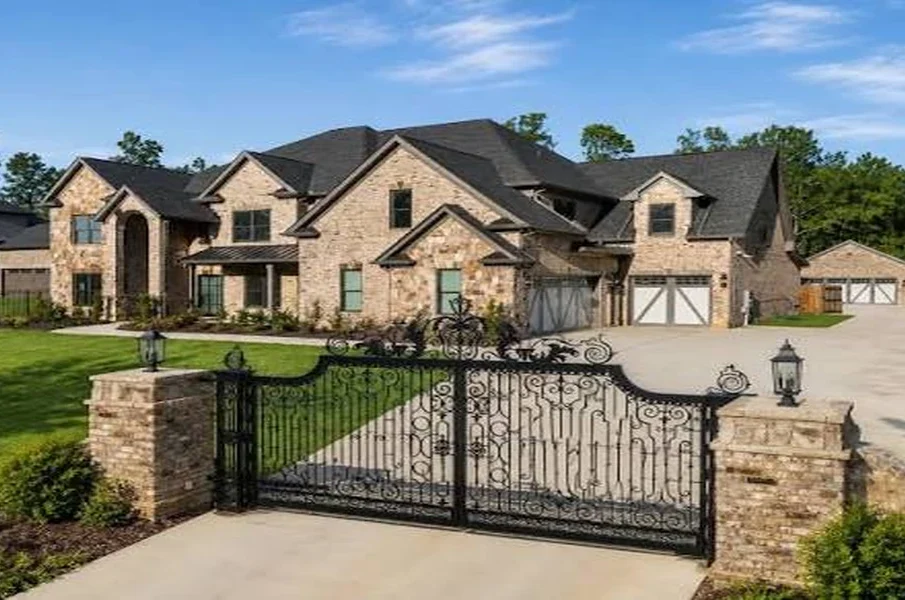
A driveway gate should make a property more practical, secure and private. Yet some gates achieve precisely the opposite. I’ve seen arrangements where drivers have to perform a three-point turn just to get through, where opening a gate means stepping into a busy road, and where the design makes everyday access unnecessarily difficult. The problem is rarely the appearance of the gate itself. It is usually that nobody thought carefully enough about how it would actually be used.
Choosing suitable driveway gates involves considerably more than measuring the entrance and picking a design. The direction they open, the gradient of the driveway, the position of parked vehicles and even the prevailing wind can determine whether an installation works properly.
These are decisions worth getting right before anything is fitted.
A gate that looks fantastic but makes getting home awkward every evening isn’t a particularly good investment.
The problem with gates that open the wrong way
Most traditional driveway gates swing inwards towards the property. This generally makes sense, particularly where the entrance opens directly onto a pavement or public highway.
However, inward-opening gates need space.
Consider a driveway that is just long enough to accommodate a family car. If the gates swing inwards, the vehicle may need to be parked further back to allow them to close.
Suddenly, a driveway that comfortably accommodated a car without gates becomes much less practical.
This is particularly common with shorter driveways on established residential streets.
The homeowner measures the width of the entrance, orders a pair of gates and only discovers the clearance problem when they try to close them behind the car.
Opening gates outwards isn’t automatically the answer either.
Gates must not obstruct public footpaths or create hazards for pedestrians and passing traffic. Depending on the circumstances, planning restrictions and highway requirements may also apply.
The correct solution might involve changing the gate design, adjusting its position or using a different opening mechanism entirely.
A few minutes spent considering the actual movement of the gates can prevent years of frustration.
Your driveway might not be as level as it looks
Sloping driveways introduce complications that are easy to underestimate.
A gate swings through an arc. If the ground rises along that arc, the bottom of the gate can strike the surface before it has fully opened.
The greater the slope, the more significant the problem becomes.
On a driveway with a noticeable incline, a conventional pair of gates may require substantial clearance underneath. That can leave an awkward gap when they are closed.
For homeowners who want gates primarily to prevent pets escaping or to improve privacy, that gap may defeat part of the purpose.
There are possible solutions.
Rising hinges can sometimes accommodate changes in ground level, although they introduce their own considerations. Sliding gates may be suitable where there is enough space to one side. In other situations, repositioning the entrance or adjusting the ground levels may be worth considering.
None of these options should be selected without examining the actual site.
I’ve always been wary of treating a sloping driveway as though it were simply a level driveway with an inconvenient angle.
The geometry changes everything.
A wide entrance doesn’t necessarily mean easy access
Another common mistake is assuming that the width between two gateposts tells you everything about vehicle access.
It doesn’t.
A car rarely approaches a driveway in a perfectly straight line.
On a narrow residential street, the driver may need to turn sharply into the entrance. The front and rear of the vehicle follow different paths through that turn, and the available space can become surprisingly tight.
Gateposts positioned too close to the turning path can make an otherwise generous entrance awkward.
This matters even more with larger family cars, SUVs and vans.
A driveway that worked perfectly well for a small hatchback ten years ago might feel considerably less forgiving with a modern seven-seater.
Before deciding on the gate width, consider the approach from both directions.
Can the vehicle turn in comfortably?
Is there enough space to straighten up?
Will the mirrors clear the posts?
Can passengers get out once the vehicle is parked and the gates are closed?
If you regularly reverse onto the driveway, test that movement too.
The practical width of an entrance is about vehicle movement, not simply the distance between two fixed points.
Heavy gates need more than substantial-looking posts
The supporting structure is one of the least glamorous parts of a driveway gate installation.
It is also one of the most important.
Large gates place considerable leverage on their supporting posts. The further the gate extends from the hinge, the greater the demands on the hinges, post and foundation.
This becomes particularly important with solid timber gates.
A heavy gate may look perfectly aligned when first installed, but inadequate support can allow it to drop over time.
The first symptom is often a latch that becomes difficult to engage.
Then the gate starts catching the ground.
Eventually, somebody begins adjusting the hinges to compensate for a post that is no longer standing correctly.
The gate itself may be perfectly sound.
The supporting structure is the problem.
Proper installation needs to account for gate weight, dimensions, wind exposure, ground conditions and the loads transferred through the hinges.
A substantial-looking timber post isn’t necessarily adequate simply because it appears thick enough.
What happens below ground matters just as much.
Privacy can come at the expense of visibility
Solid driveway gates are popular because they provide privacy and create a clear boundary between the home and the street.
There are situations where that is entirely appropriate.
But completely screening an entrance can also reduce visibility.
Drivers need to see pedestrians, cyclists and approaching vehicles before moving out onto the road.
If tall, solid gates are positioned close to the pavement, they may make it difficult to assess whether the entrance is clear.
This is especially relevant on busy residential streets or where the driveway sits between walls, hedges or other solid boundaries.
The answer isn’t necessarily to abandon privacy.
Partially open designs, carefully considered gate positioning and suitable sightlines can sometimes provide a better balance.
The surrounding garden fencing also influences how the entrance works. A solid boundary on both sides of a driveway can create a very different visibility problem from an open frontage.
A good entrance should feel secure without making every departure a guessing game.
Automation isn’t always the convenient option
Electric driveway gates sound appealing.
Press a button, the gates open, and you drive straight in.
For some properties, automation is a genuinely useful improvement. It can be particularly convenient for long driveways, frequent vehicle movements and households where manually operating heavy gates is difficult.
But automation adds complexity.
There are motors, controls, safety devices, electrical connections and ongoing maintenance requirements.
Powered gates can create serious crushing, shearing and trapping hazards if they are not properly designed and installed. In the UK, automated gate systems must meet applicable machinery safety requirements, with appropriate risk assessment and protective measures.
A motor isn’t simply an accessory that can be attached to any existing gate.
The gate structure must be suitable for automation, and the completed system needs to operate safely.
Homeowners should also consider what happens during a power cut.
Is there a suitable manual release?
Can it be accessed when needed?
Will the gates still allow safe access to the property?
Automation can make everyday life easier, but only when the complete system has been properly considered.
Sometimes a well-designed manual gate is the more sensible choice.
Think about deliveries, visitors and everyday routines
A driveway entrance isn’t used exclusively by the homeowner.
Delivery drivers need access.
Visitors may need somewhere to stop.
Bins have to be moved.
Children may walk or cycle through the entrance.
Garden equipment occasionally needs transporting between the front and rear of the property.
These details rarely feature prominently in gate brochures, but they influence how practical an installation becomes.
For example, a large pair of driveway gates may be perfectly manageable when you’re driving, but unnecessarily awkward when you simply want to walk through.
A separate pedestrian gate can solve that problem where space allows.
Alternatively, the design may permit one leaf to be opened independently.
Think about bin collection too.
If the gates make it difficult to move wheelie bins onto the pavement, that minor inconvenience becomes a weekly irritation.
The best arrangements account for the ordinary jobs people do around their homes, not just the occasional arrival of a car.
Wind can make large solid gates difficult to handle
Wind exposure deserves particular attention with larger gates.
A tall, solid gate presents a substantial surface to the wind. On an exposed driveway, gusts can make it difficult to control while opening or closing.
There is also the risk of a gate being caught by the wind and swinging unexpectedly.
Suitable hinges, stops, catches and restraints are essential, but the design itself should account for the location.
Around Barnsley and the surrounding South Yorkshire area, property layouts vary considerably.
A sheltered driveway between houses may experience relatively little wind. A property on the edge of a development or facing open countryside can be very different.
The same gate design may behave differently in those two settings.
This is another reason to avoid choosing purely from photographs.
A gate needs to suit the environment in which it will operate.
Sometimes the best solution is a smaller gate
People often assume that bigger gates provide better security or make a property look more impressive.
Not necessarily.
A large gate introduces more weight, requires more operating space and places greater demands on its supporting structure.
If the entrance doesn’t need the full width, a smaller arrangement may be easier to use and maintain.
The same applies to height.
Very tall gates can create privacy, but they may also affect visibility, increase wind loading and make the frontage feel unnecessarily enclosed.
Planning rules are another consideration. In England, gates, fences and walls can require planning permission depending on their height, position relative to a highway and other property-specific restrictions.
It is worth checking the applicable requirements before committing to a design, particularly for taller entrances or properties with additional planning constraints.
The objective should be to achieve the right balance of access, security, appearance and practicality.
Not simply to install the biggest gates that will fit.
Design the entrance around the way you actually live
Before replacing or installing driveway gates, spend a few days paying attention to how the entrance is used.
Notice where you stop the car.
Watch how you turn into the driveway.
Think about how much room you need to unload shopping or get children out of the vehicle.
Consider where visitors stand, how bins are moved and whether pedestrians can be seen clearly when leaving.
If the driveway slopes, measure the gradient rather than guessing.
If the property is exposed, think about the effect of wind.
If you’re considering automation, establish whether the gate structure and available space are suitable before buying equipment.
These aren’t particularly exciting parts of choosing a gate.
They are, however, the details that determine whether it works well.
A driveway gate should be something you barely have to think about once it has been installed. You arrive home, open it, park and get on with your evening.
If you have to manoeuvre around it, wrestle with it or worry about whether the car will fit every single day, something has gone wrong with the design.
And unlike the occasional maintenance job, that inconvenience isn’t going to disappear with a little oil on the hinges.