Common Roofing Problems in Older Surrey Properties and How to Address Them
Surrey is home to an impressive variety of residential properties, from Victorian terraces and Edwardian houses to traditional cottages, post-war homes and more modern developments. While these properties vary considerably in their architectural styles, many share one important characteristic: their roofs require ongoing maintenance to protect them against the effects of age, weather and general deterioration.
For homeowners in established areas such as Epsom, Ewell, Cheam and Leatherhead, understanding the warning signs of roofing problems can make a significant difference to the long-term condition of a property.
A roof rarely develops a major problem overnight. In many cases, serious deterioration begins with something relatively minor, such as a slipped tile, damaged flashing or a blocked gutter. Left unresolved, these seemingly small issues can eventually lead to water penetration, damaged insulation, rotting timber and expensive structural repairs.
Knowing what to look for, and when to seek professional assistance, can help homeowners avoid unnecessary expenditure while preserving the character and integrity of their properties.
1. Slipped, Cracked and Missing Roof Tiles
One of the most common problems affecting older residential roofs is damage to individual roof tiles.
Many established Surrey properties feature traditional clay tiles or concrete interlocking tiles, both of which can provide decades of protection when properly installed and maintained. However, the materials and components beneath them gradually deteriorate, particularly when exposed to repeated periods of freezing temperatures, heavy rainfall and strong winds.
Clay tiles can become cracked or fractured, while concrete tiles may suffer from surface erosion and weathering. Over time, the nails or fixings securing tiles can also deteriorate, increasing the likelihood of tiles slipping out of position.
Warning signs to look for
Homeowners may notice several indications that their roof tiles require attention:
- Individual tiles appearing uneven or out of alignment.
- Visible gaps in the roof covering.
- Broken tiles collecting in gutters or on the ground.
- Damp patches appearing in the loft following rainfall.
- Small areas of daylight visible through the roof covering.
These problems should not be ignored. Even a single missing tile can expose underlying roofing materials to water, potentially causing damage that extends well beyond the original defect.
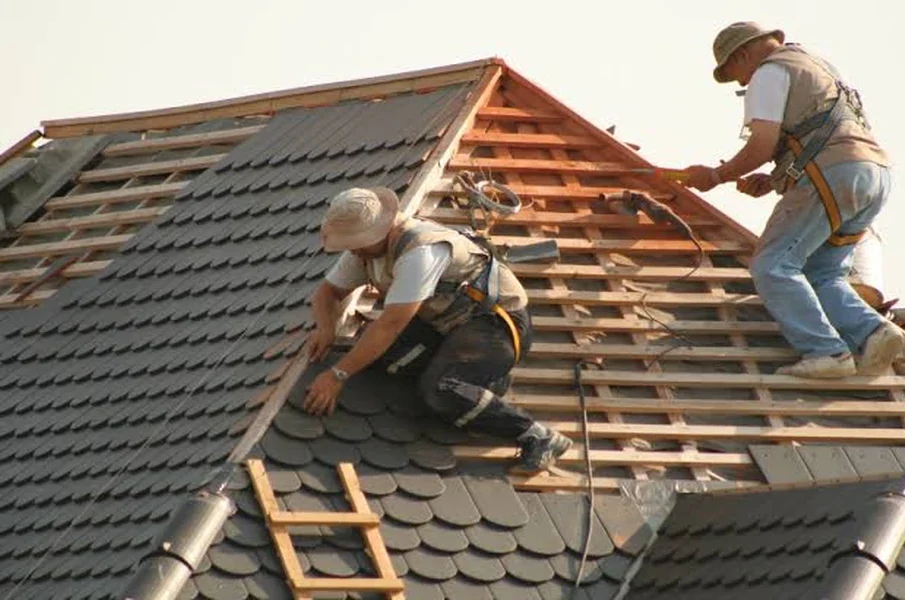
Fortunately, isolated tile damage does not necessarily mean the entire roof needs replacing. If the surrounding materials remain in good condition, a professional roofer may be able to replace the damaged tiles and restore the roof’s weather resistance.
When damage affects more than a handful of tiles, professional residential roofing services can help establish whether isolated repairs are sufficient or more extensive work is necessary.
The priority is identifying the extent of the problem rather than assuming that a complete replacement is required.
2. Deteriorating Lead Flashing Around Chimneys
Chimneys are a familiar feature of many older Surrey homes, particularly Victorian and Edwardian properties.
Although they contribute significantly to the character of traditional buildings, chimneys are also among the most vulnerable areas of a roof.
The junction between the chimney stack and the roof covering must be protected against rainwater. This is commonly achieved using lead flashing, which forms a weather-resistant barrier around the chimney.
Over time, flashing can become damaged, displaced or incorrectly sealed. Lead may develop fatigue cracks after years of thermal movement, while mortar securing certain flashing details can deteriorate.
When this happens, water may find its way into the roof structure.
How to identify flashing problems
Signs of defective chimney flashing can include:
- Damp staining on chimney breasts.
- Water marks appearing on ceilings near chimney stacks.
- Visible gaps between flashing and brickwork.
- Sections of lead lifting away from their intended position.
- Recurring leaks during prolonged or wind-driven rainfall.
One challenge with chimney leaks is that water does not always appear directly beneath the point of entry.
Moisture can travel along roof timbers, masonry and other surfaces before becoming visible indoors. Consequently, the location of a damp patch does not always reveal the precise source of the problem.
Professional inspection is often necessary to distinguish flashing defects from damaged chimney pointing, defective roof tiles or other potential causes.
Depending on the condition of the materials, repairs may involve correctly refitting flashing, replacing damaged sections or addressing deterioration in the surrounding masonry.
3. Ageing Roof Underlay and Battens
The roof tiles visible from outside a property are only one element of a complete roofing system.
Beneath them are components that contribute to the roof’s weather resistance and structural performance, including battens, underlay and the supporting roof structure.
Older properties may contain traditional bituminous felt underlays, while more recent roofing work often uses modern membranes selected to suit the particular roof construction.
As these materials age, they can become brittle, torn or otherwise deteriorated.
Wooden battens may also suffer decay if exposed to persistent moisture, particularly where water penetration has remained undetected.
Why these problems matter
Damaged underlay can allow wind-driven rain or moisture entering beneath the tiles to reach areas that should remain protected.
Deteriorating battens may compromise the secure fixing of the roof covering, potentially contributing to slipping tiles and further damage.
Unlike a visibly broken tile, defects affecting underlay and battens are not always apparent from ground level.
Common warning signs include persistent moisture within the loft, visible deterioration of accessible roofing materials and evidence of repeated leaks.
However, condensation can produce similar symptoms, making accurate diagnosis important.
In some circumstances, replacing a small section of the roof covering may provide sufficient access for repairs. Where deterioration is extensive, more substantial roofing work may be necessary.
Homeowners should avoid making assumptions based solely on the age of their property. A well-maintained older roof may remain serviceable for many years, while a newer roof installed incorrectly can develop problems surprisingly quickly.
4. Blocked Gutters and Poor Roof Drainage
Not every roofing problem begins with damaged tiles or defective flashing.
Poor drainage can cause substantial damage to otherwise sound roofing systems.
Surrey’s established residential neighbourhoods often feature mature trees, making fallen leaves, moss and other debris common causes of gutter blockages.
When gutters become obstructed, rainwater may overflow and run down external walls rather than being channelled safely into the drainage system.
This can contribute to damp masonry, staining, deterioration of decorative finishes and moisture penetration around vulnerable building details.
Common drainage problems
Typical issues include:
- Gutters blocked by leaves, moss or roofing debris.
- Downpipes obstructed by accumulated material.
- Gutters sagging due to failed brackets or fixings.
- Incorrectly positioned gutter sections.
- Leaking joints and damaged seals.
- Water collecting where drainage falls are inadequate.
Overflowing gutters can be particularly troublesome on older properties where external walls may be more vulnerable to prolonged saturation.
Regular inspections and clearing of debris can help prevent these problems.
Where gutters repeatedly overflow despite cleaning, the issue may involve inadequate drainage capacity, incorrect alignment or defects requiring more extensive repairs.
Homeowners should also consider whether water is being discharged safely away from the building, rather than simply moving the problem from the roof to the foundations or external walls.
5. Flat Roof Deterioration on Extensions and Garages
While traditional pitched roofs dominate many older residential areas, flat roofs are also common throughout Surrey.
They frequently appear on rear extensions, garages, porches, dormer structures and other additions to established properties.
Flat roofing systems can be constructed using several materials, including traditional bituminous coverings, modern single-ply membranes and reinforced liquid-applied systems.
Each has different installation requirements, maintenance considerations and potential failure points.
Common flat roof problems
Older flat roofs may develop:
- Cracks or splits in the waterproof covering.
- Failed joints or seams.
- Blistering or lifting of surface materials.
- Defective detailing around rooflights and penetrations.
- Blocked outlets and drainage channels.
- Persistent standing water due to inadequate falls.
One misconception is that all flat roofs should be completely level.
In reality, flat roofs should generally incorporate appropriate falls to encourage rainwater towards drainage outlets.
Prolonged ponding can indicate drainage problems, although the seriousness depends on the roof’s design, structural capacity and waterproofing system.
Flat roof leaks can be particularly difficult to diagnose because water may travel beneath the covering before appearing inside the property.
A detailed inspection should assess the condition of the waterproof membrane, the roof’s drainage and the junctions between the flat roof and adjoining walls or structures.
In some cases, localised repairs may be appropriate. Elsewhere, widespread deterioration may make replacement the more practical long-term option.
6. Poor Roof Ventilation and Condensation
Not all moisture problems inside a roof originate from external leaks.
Condensation is another common concern, particularly in older homes that have undergone improvements to insulation, heating and draught-proofing.
Warm, moisture-laden air from inside a building can enter colder roof spaces. When it encounters sufficiently cold surfaces, condensation may form.
Without appropriate ventilation and moisture control, this can lead to damp timbers, mould growth and deterioration of stored materials.
Signs of condensation in the loft
Homeowners may notice:
- Water droplets forming on the underside of roofing materials.
- Damp or discoloured roof timbers.
- Mould appearing on timber surfaces.
- Wet insulation without an obvious external leak.
- Persistent musty smells within the loft.
Condensation problems often become more noticeable during colder months when temperature differences between indoor living spaces and the roof void increase.
However, effective ventilation and moisture management depend on the roof’s construction.
For example, the requirements of a traditional ventilated cold roof differ from those of a correctly designed warm roof.
Simply adding ventilation openings without understanding the roof structure may not resolve the underlying issue.
A competent roofing professional can help assess whether the moisture is associated with condensation, water penetration or a combination of factors.
7. Storm Damage and Wind-Driven Rain
Although Surrey does not typically experience the same exposure as some coastal or upland regions, strong winds and intense rainfall can still cause significant roofing problems.
Older roofs may be especially vulnerable where existing defects have reduced the security of their coverings or flashings.
High winds can dislodge loose tiles, damage ridge details or expose previously concealed weaknesses.
Heavy rainfall may then exploit these openings, allowing moisture to penetrate the building.
What homeowners should do after severe weather
Following particularly strong winds or prolonged rain, homeowners should carry out a visual inspection from a safe position on the ground.
Look for displaced tiles, fallen roofing debris, damaged gutters or newly visible defects.
Inside the property, check accessible loft areas and ceilings for fresh water staining or unusual dampness.
Avoid climbing onto roofs or using ladders to investigate suspected damage without suitable training and equipment.
Roof surfaces can be slippery, fragile or structurally compromised, and the risks increase considerably following severe weather.
If damage is suspected, arrange a professional assessment before attempting repairs.
Prompt attention can help limit further deterioration, particularly where the building’s weatherproofing has been compromised.
8. When Should an Older Roof Be Repaired or Replaced?
One of the most important decisions facing homeowners is whether an ageing roof can be economically repaired or whether replacement would provide better long-term value.
There is no universal answer.
The appropriate solution depends on the type of roof, the materials used, its installation history, the extent of deterioration and the condition of the underlying structure.
When repairs may be appropriate
Localised repairs are often worth considering when:
- Damage is confined to a relatively small area.
- The majority of the roof covering remains sound.
- The supporting structure is in satisfactory condition.
- Replacement materials are available and compatible.
- The cost of repair is reasonable relative to the roof’s remaining service life.
For example, a few damaged tiles or an isolated flashing defect may be repairable without replacing an otherwise functional roof.
When replacement may be more sensible
A complete or partial roof replacement may warrant consideration where:
- Large sections of the covering have deteriorated.
- Multiple recurring leaks are affecting different areas.
- The existing roof has widespread fixing or batten problems.
- Previous repairs have repeatedly failed to address underlying defects.
- The condition of the roof makes further repairs uneconomical.
Age alone should not determine the decision.
A roof that has been properly maintained may continue performing effectively beyond its anticipated service life, while poor installation or inappropriate materials can shorten the lifespan of a newer system.
Understanding the available options for roof repairs and maintenance can help homeowners make informed decisions about whether to maintain, repair or replace an ageing roof.
An assessment of the roof’s condition and realistic repair options helps homeowners make a more informed financial decision.
9. Choosing Professional Roofing Assistance in Epsom
When an older property develops roofing problems, selecting an experienced contractor is essential.
Traditional roofing materials, chimney details and established roof structures can require different approaches from those used on modern residential developments.
Homeowners should look for contractors capable of identifying the underlying cause of a problem rather than merely treating its visible symptoms.
For property owners seeking experienced roofers in Epsom, Infinite Roofing provides roofing services for residential properties in Epsom and the surrounding area.
Before agreeing to substantial work, homeowners should request a clear explanation of the proposed repairs, the materials to be used and any potential limitations.
A written quotation should outline the agreed scope of work and identify significant additional costs where these can reasonably be anticipated.
It is also sensible to establish whether the contractor has appropriate insurance and relevant experience with the property’s particular roofing system.
Where extensive work is required, homeowners should check whether building regulations approval or other permissions may apply, particularly for listed buildings and properties subject to additional planning restrictions.
Clear communication, realistic recommendations and appropriate documentation are just as important as the technical work itself.
10. Preventative Maintenance Can Help Avoid Expensive Repairs
While some roofing defects are unavoidable, regular maintenance can reduce the likelihood of small issues developing into more serious problems.
Homeowners do not need to become roofing experts, but they should remain aware of changes in their property’s condition.
A straightforward maintenance routine could include:
- Visually checking roof coverings after significant storms.
- Keeping gutters and downpipes clear of debris.
- Monitoring ceilings and accessible loft spaces for moisture.
- Watching for deterioration around chimneys and roof junctions.
- Arranging inspections when tiles become displaced or damaged.
- Addressing known leaks promptly rather than allowing them to continue.
- Maintaining records of previous roofing repairs and inspections.
Properties surrounded by mature trees may require more frequent gutter maintenance, while older roofs with known defects may benefit from closer monitoring.
Professional inspections can be particularly valuable before purchasing an older property, undertaking major renovations or installing equipment that affects the roof structure.
The objective is not to replace materials unnecessarily, but to identify developing issues before they compromise the building.
Final Thoughts
Older properties contribute enormously to the character of Surrey’s residential neighbourhoods, but their roofs require appropriate care as materials and building components age.
From slipped tiles and deteriorating chimney flashing to blocked gutters, flat roof defects and condensation, many roofing problems begin with relatively minor symptoms.
Recognising those early warning signs allows homeowners to investigate problems before they lead to more extensive damage.
The most effective approach combines sensible preventative maintenance, timely professional inspections and repairs that address the underlying cause rather than offering a temporary solution.
For homeowners in Epsom and the surrounding Surrey area, looking after an existing roof is an important part of protecting both the condition and long-term value of their property.