How Layered Lighting Adds Depth to Home Interiors
Good lighting does more than illuminate a room. It shapes mood, defines space, and adds personality to every corner. When done thoughtfully, layered lighting transforms a flat, ordinary interior into something that feels alive and intentional. From false ceiling lights that anchor a room to decorative lights that add personality, understanding how to layer light is one of the most useful skills in home design.
What Is Layered Lighting?
Layered lighting is the practice of using multiple light sources at different heights and intensities to create a balanced, visually rich environment. Rather than relying on a single overhead fixture, it combines three distinct types of lighting: ambient, task, and accent.
Each layer serves a purpose. Together, they give a room depth, warmth, and flexibility. This approach works in every kind of home, whether you have a compact apartment or a spacious house.
The Three Layers of Light
- Ambient Lighting: The Foundation
Ambient lighting is the primary layer that ensures balanced illumination throughout a room. It sets the overall mood while providing comfortable brightness for everyday living. False ceiling lights are ideal for this layer because they distribute light evenly and maintain a clean, uncluttered look. In open layouts, zoning these lights allows you to control brightness in different areas, improving both functionality and comfort.
- Task Lighting: Focused and Functional
Task lighting supports specific activities such as reading, cooking, studying, or grooming. It should be bright, direct, and positioned to reduce shadows and eye strain. Common examples include under-cabinet lights in kitchens, desk lamps in study areas, and pendant lights over counters. While practical in purpose, thoughtfully chosen task lighting fixtures can also enhance the overall aesthetic of a space.
- Accent Lighting: The Detail Layer
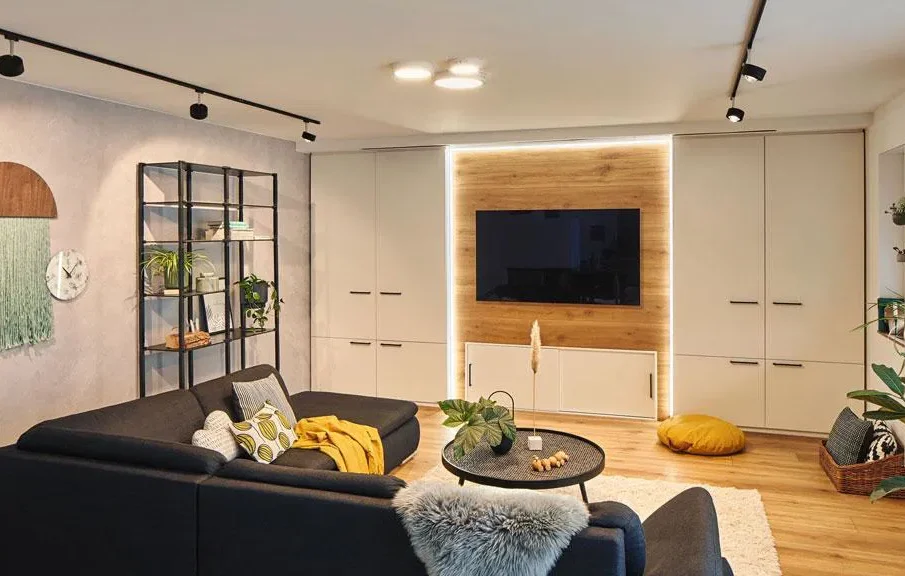
Accent lighting highlights architectural features, artwork, textured walls, or decorative shelves. It adds contrast and depth, making interiors feel more layered and intentional. Strip lights work particularly well for this purpose. Installed behind shelving, under beds, along staircases, or behind media units, they create a subtle glow that enhances dimension without overpowering the room’s overall lighting balance.
Why Depth Matters in Interior Design
A room lit by a single source looks flat. Shadows fall in predictable ways, surfaces lose their texture, and the space feels static. Layered lighting solves this by creating contrast between light and shadow across different planes.
When light comes from multiple directions and heights, it creates visual interest. A wall washed in warm light looks more inviting. A shelf highlighted with strip lights appears to float. A ceiling with integrated false ceiling lights feels grounded without being harsh.
This interplay of light and shadow is what gives a room its character. It is the difference between a space that simply functions and one that genuinely feels good to be in.
How Decorative Lights Contribute to the Overall Look
Decorative lights serve an aesthetic purpose as much as a functional one. They are often conversation pieces in their own right. A sculptural pendant over a dining table, a cluster of globe bulbs in a reading nook, or a vintage-style floor lamp in a corner can all anchor a space and reflect personal style.
Decorative lights work best when they complement the other layers rather than compete with them. If the ambient and task lighting are handled well, decorative lights become the finishing touch that pulls everything together.
Consider scale and proportion when choosing decorative lights. A large pendant in a small room can feel overpowering. A small fixture in a grand space can look out of place. Getting the sizing right makes a significant difference.
Practical Tips for Layering Light at Home
If you are thinking about introducing layered lighting into your home, these practical starting points can help:
- Start with the ambient layer. Decide where your primary light sources will sit before adding anything else. False ceiling lights, track lighting, or a central fixture all work as anchor points.
- Introduce strip lights for flexibility. These can be added with minimal disruption and have a big impact. Try them behind a headboard, under kitchen cabinets, or along a hallway skirting to see how they change the feel of a space.
- Use dimmers wherever possible. The ability to adjust light intensity makes layering far more effective. A room that works for dinner conversation should also work for a quiet evening in.
- Choose warm tones for living spaces. Light in the 2700K to 3000K range feels comfortable and flattering in bedrooms, living rooms, and dining areas. Cooler tones suit bathrooms and workspaces.
- Let decorative lights reflect your personality. These are the pieces that make a home feel personal. Do not overthink them; choose what genuinely appeals to you.
Common Mistakes to Avoid
Even with the best intentions, lighting can go wrong. Here are a few things worth keeping in mind:
- Relying on a single overhead light makes rooms feel flat and clinical.
- Ignoring corners leaves spaces feeling unfinished. A floor lamp or wall sconce in a corner adds warmth and draws the eye into the space.
- Mismatching colour temperatures across layers creates visual inconsistency. Try to keep bulb tones consistent within a room.
- Overlooking natural light is another common oversight. Layered artificial lighting should complement daylight, not fight against it.
Conclusion: Bringing It All Together
Layered lighting is less about rules and more about intention. When you combine false ceiling lights for broad ambient coverage, strip lights for accent depth, and decorative lights for personality, you create an interior that responds to how you actually live.
The goal is a home that feels warm in the evenings, bright when you need focus, and atmospheric when you want to relax. With a thoughtful layered approach, that balance is well within reach for any home, at any budget.