Kansas City Pest Control: Black Widow vs Brown Widow Spiders and the Identification Most People Get Wrong
A homeowner cleaning out a storage shed in Raytown spots a dark spider with a red mark on the abdomen and assumes it must be a black widow. A gardener in Olathe finds a smaller, mottled brown spider with an orange hourglass underneath a lawn chair cushion and has no idea whether it is dangerous. A parent in the Northland sees a spider in the garage, confirms on the internet that it is definitely a widow, and spends the weekend anxious about whether the family should avoid the space. Kansas City pest control companies handling arachnid calls, including ZipZap Termite & Pest Control in Lawson, see this identification confusion constantly. The three widow species that occur in Missouri are medically significant, genuinely distinct from each other, and frequently confused with harmless cellar spiders and common house spiders. Getting the identification right changes both the response and the follow-up.
The Three Widow Species in Missouri
Two native black widow species occur across the state, and a third introduced species has been documented in recent years.
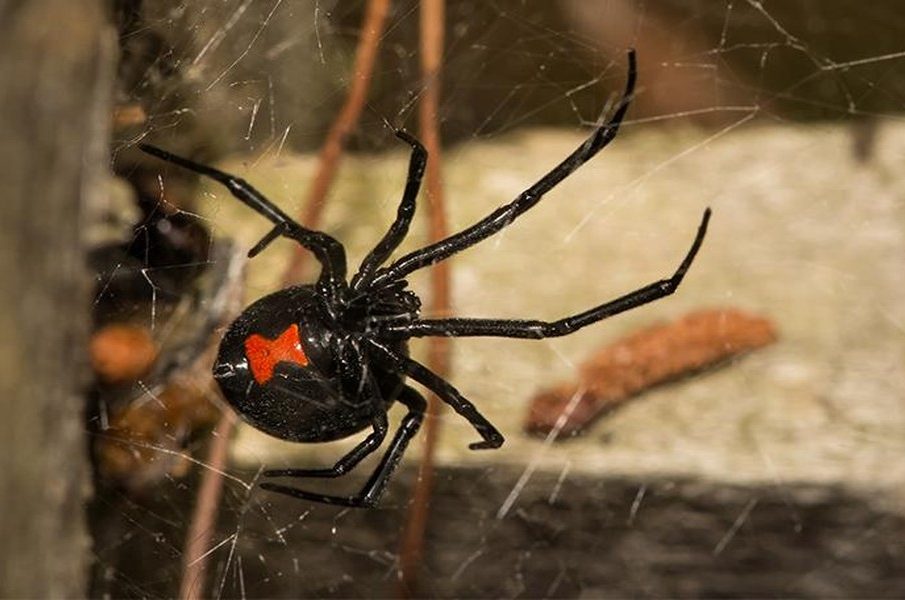
The northern black widow (Latrodectus variolus) is the more common of the two native species in the Kansas City metro. Females reach about half an inch in body length (larger with legs extended), are glossy jet black, and show a distinctive red hourglass marking on the underside of the abdomen. In L. variolus, the hourglass is typically broken, meaning the two triangles are separated by a black band rather than connecting into a full hourglass shape. Small red or orange spots often appear along the top of the abdomen as well.
The southern black widow (Latrodectus mactans) occurs in Missouri with overlapping range, more commonly in the southern half of the state but present in the Kansas City area. Females are similar in size and general appearance but carry a complete, unbroken red hourglass underneath, and they typically lack the dorsal spots seen on northern widows.
The brown widow (Latrodectus geometricus) was introduced to the United States from Africa and has expanded its range significantly over the past two decades. Missouri documentation remains relatively sparse compared to the Gulf Coast and southern states, but confirmed sightings have been reported, and the species is expected to continue expanding. Females are lighter in color (tan, gray, or mottled brown rather than black), noticeably smaller than the black widows, and carry an orange or yellow-orange hourglass rather than the bright red of the native species. The egg sacs are the most reliable brown widow diagnostic: spiky or tufted in appearance rather than the smooth round sacs produced by black widows.
What the Harmless Lookalikes Actually Are
Several spiders common in Kansas City homes and yards get misidentified as widows on a regular basis.
The false widow (Steatoda grossa and related Steatoda species) is a globular, dark spider that looks superficially like a black widow but is purplish-brown rather than glossy black and lacks the red hourglass. False widows are mildly venomous, and their bites produce minor local symptoms, but they are not medically significant.
Cellar spiders (Pholcidae), the long-legged “daddy longlegs” of basement and garage ceilings, are completely harmless despite persistent folklore to the contrary. They are predators of other spiders, including widows, and their presence in a garage or basement tends to indicate lower populations of more dangerous species.
Common house spiders (Parasteatoda tepidariorum) are tan to light brown, build tangled webs in corners, and are harmless. Size and web style usually give them away quickly once a homeowner knows to check for the specific widow markings.
The distinction matters because treating every dark spider as a widow both wastes effort and misses actual widows through alarm fatigue.
Where Widows Actually Live on Kansas City Properties
Widow spiders are outdoor species that occasionally move into structures. Understanding their habitat preferences shortens the search when assessing risk on a property.
Detached garages, sheds, workshops, and outbuildings are the most common harborage. Widows build irregular, tangled webs low to the ground and prefer quiet, dry, undisturbed corners. The underside of workbenches, the inside of rarely-opened storage containers, the back corners of garden hose reels, and the space behind stacked items all fit the profile.
Woodpiles and stone walls provide excellent outdoor harborage. Stacked firewood against the house is the classic widow habitat, and reaching into a woodpile without checking first is one of the more common bite scenarios.
Children’s playsets that include plastic slides, inside hollow metal framing, and in crevices of climbing structures can harbor widows during warm months, particularly after the equipment has been unused for extended periods.
Patio furniture, grill covers, pool equipment storage, and similar outdoor items that sit undisturbed through cooler weather often host widow webs by mid-summer. Inspecting cushions and storage compartments before use is worthwhile during peak season.
Attached garages are the usual entry point when widows move indoors. From there, they occasionally reach basements and first-floor interior spaces through gaps around utility penetrations.
Why Widow Bites Genuinely Warrant Medical Attention
Widow bites are rare. A female widow is shy, flees when disturbed, and rarely bites unless physically pressed against skin. The CDC and AAPCC (American Association of Poison Control Centers) track widow bite data nationally, and the numbers are low relative to the populations of the spiders.
When bites do occur, they are medically significant enough that evaluation is warranted. Widow venom contains alpha-latrotoxin, a neurotoxin that produces systemic symptoms: severe cramping muscle pain, abdominal rigidity, nausea, hypertension, and sweating. Symptoms typically peak 1 to 3 hours after the bite and can persist for several days. Deaths are rare but documented, particularly among young children, older adults, and anyone with significant cardiovascular conditions.
Any suspected widow bite warrants prompt medical evaluation. Bringing the spider, if it can be safely captured, helps confirm identification. Emergency departments manage widow envenomation with pain control, muscle relaxants, and occasionally antivenom in severe cases.
When Kansas City Pest Control Treatment Is Worth Considering
Seeing a single widow in a garage or on a woodpile is not automatically an emergency. Most properties with widow activity have small, localized populations that pose limited risk to occupants who take reasonable precautions. Professional treatment makes sense in a few specific situations.
Properties with repeated widow sightings across multiple locations indicate an established population that benefits from a coordinated treatment plan combining harborage reduction and targeted application. Households with small children who regularly access garages, outbuildings, or play equipment shift the risk calculation toward earlier intervention. Commercial properties with employee safety considerations warrant documented service.
A Kansas City pest control provider can assess the specific harborage on the property, reduce clutter that supports widow habitat, treat likely refuge areas with appropriate residual products, and monitor for population reduction over subsequent visits.
The Short Version
Kansas City has three widow spider species, all medically significant, all outdoor-oriented, and all frequently confused with harmless look-alikes. Correct identification relies on the hourglass marking, body color, and in the case of brown widows, the distinctive spiky egg sacs. Widow bites are rare but warrant medical evaluation when they happen. For homeowners seeing multiple widows across their property, a Kansas City pest control provider such as ZipZap Termite & Pest Control can assess harborage and reduce risk without the overreaction that alarm-driven spider content tends to produce.